ISO 13485:2016 CERTIFIED QUALITY MANAGEMENT
Rigorous Quality Control for Precision Silicone Manufacturing
Powered by ISO 13485:2016 certified systems and state-of-the-art metrology, we ensure every silicone component meets the most rigorous international quality standards — with audit-ready documentation available for every production batch.
🔒 Full QMS documentation available · Audit-ready at any time · ISO 13485 certified since 2016
Quality by the Numbers
Quantifiable quality commitments — not marketing claims.
±0.005mm
Optical measurement precision on critical dimensions
100%
Vision inspection coverage — no sampling on critical medical components
300,000+
Shot life guaranteed with S136 premium tool steel
24h
Batch inspection report turnaround from production completion
Globally Certified Quality Systems
Our certifications are not wall decorations. Each one represents a documented quality commitment that directly affects how your components are manufactured, inspected, and delivered.
ISO 13485:2016
Medical Device Quality Management System
The international standard specifically designed for medical device manufacturing. Our certification covers the complete production lifecycle — from design review and risk management through to post-market traceability.
Every production batch is documented and auditable. We can provide complete QMS documentation for your supplier qualification and regulatory submission process.
ISO 9001:2015
General Quality Management System
The globally recognized foundation for quality management across all industries. Our ISO 9001 certification covers non-medical production programs with the same structured process control and continuous improvement standards.
Consistent quality management applies to every project regardless of application — medical, industrial, optical, or consumer.
FDA & USP Class VI
Material Compliance Verified
All silicone materials used in medical and food-contact applications are sourced from suppliers providing FDA 21 CFR 177.2600 and USP Class VI compliance documentation. Material compliance certificates are included with every production batch.
Silicone materials in your components are verified safe for medical and food-contact applications in both US and global markets.
Full certification documentation available upon request under NDA. → Request Documentation
Advanced Inspection & Metrology Lab
We invest in world-class equipment to eliminate human error and provide quantifiable data for every production batch. Every measurement is traceable to a documented equipment calibration record.
| Equipment | Model / System | Key Capability | Application |
|---|---|---|---|
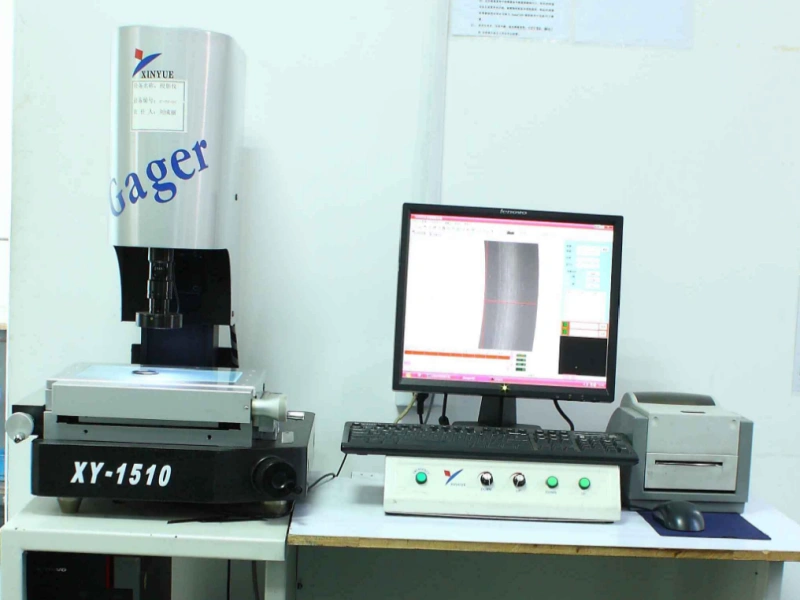
| Optical Measuring System | XY-1510 Video Measuring | Non-contact dimensional verification to ±0.05mm | Critical dimension inspection for medical and optical parts |
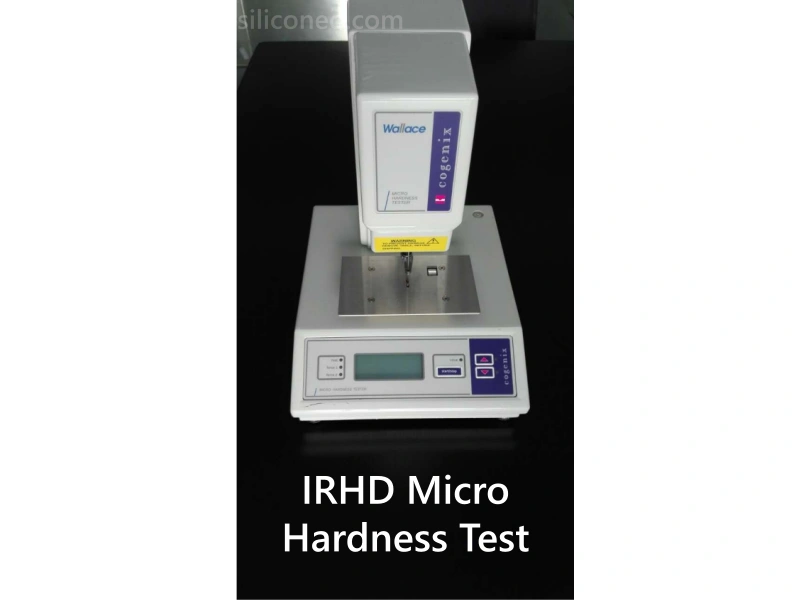
| IRHD Hardness Tester | Wallace Micro IRHD | Shore hardness verification to ±0.5 IRHD accuracy | Material hardness compliance per batch |
| Automated Vision Inspection | CCD AOI Vision System | 100% defect detection with real-time OK/NG sorting | Full inspection for flash, deformation, and dimensional defects |
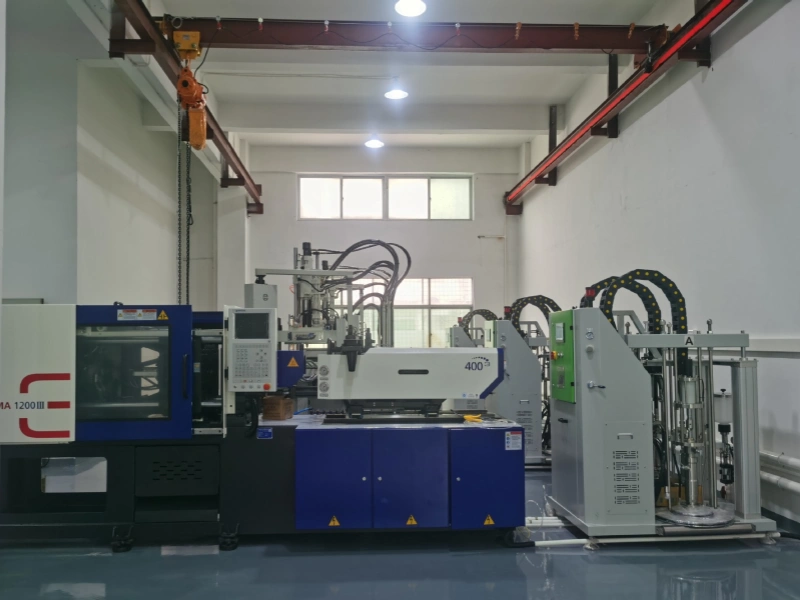
| Injection Production Lines | Haitian High-Speed Series | Closed-loop parameter monitoring per shot | Process stability for high-volume production |
| Cleanroom Monitoring | Particle Counter System | Real-time ISO Class 8 air quality monitoring | Contamination control for medical-grade production |
Proactive Risk Management: Beyond Defect Detection
Most quality systems detect problems after they occur. Our QMS is designed to prevent them before production begins.
❌ Reactive Quality Control
Defects detected after production.
Rejected parts scrapped or reworked.
Root cause investigated after failure.
Customer may receive affected batches.
✅ Our Proactive Quality System
Failure modes identified before tooling.
Control plans define prevention measures.
FMEA documentation updated with experience.
Process validation confirms stability first.
FMEA Integration at Every Stage
We apply Failure Mode and Effects Analysis (FMEA) at both the design and process stages. Potential failure modes are identified, evaluated, and assigned control measures before they can affect your production components. For medical device programs, FMEA documentation is available as part of the production qualification package — supporting your design history file (DHF) and risk management documentation under ISO 14971.
Our QMS detects defects — and prevents them from forming in the first place.
100% End-to-End Traceability
If a quality question arises six months after delivery, we can trace any component back to its specific production shift, material lot, and machine parameters within 24 hours.
01
From Raw Material
Every bag of Dow, Wacker, or Elkem LSR is received with its original COA. Lot number, physical property results, and compliance certification are logged before the material enters the cleanroom.
Raw material IQC before every production run
02
Through Production
Each shift and machine cycle is recorded in our ERP system, linked to a unique Batch Control Number. Recorded parameters include injection pressure, cure temperature, cycle time, operator ID, and material lot.
Complete production audit trail per batch
03
To Final Delivery
Every carton carries a unique Batch Control Number. The inspection report includes dimensional data, hardness results, material lot reference, and production parameters for complete traceability.
Traceback within 24 hours of any inquiry
Traceability guarantee: We can trace any component back to its raw material lot within 24 hours of a quality inquiry — at any point after delivery.
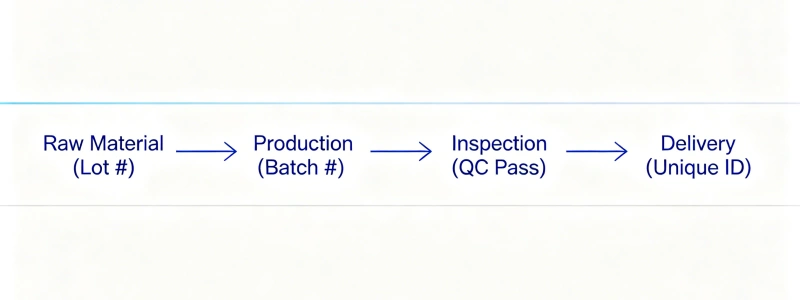
Complete production traceability system: from raw material COA to final delivery inspection report — every batch documented.
Quality Control Across All Capabilities
Our ISO 13485 quality system applies to every manufacturing capability — not just LSR injection.
FAQs for Quality & Control
Q1: How do you ensure the raw material is genuine and medical-grade?
A: We only source from global leaders like Dow and Elkem. Every batch of material received is accompanied by an original COA (Certificate of Analysis). Upon arrival, our QC team verifies the lot number and performs a basic physical property test before the material is admitted to our cleanroom for production.
Q2: Does your ISO 13485 certification cover the specific manufacturing of LSR parts?
A: Yes. Our AQSR ISO 13485:2016 certification is specifically tailored for the contract manufacturing of medical-grade silicone components. This ensures that our entire QMS—from design review to risk management and post-market traceability—meets the stringent requirements of the medical device industry.
Q3: What measures do you take to prevent “Flash” (burrs) and dimensional instability?
A: Flash prevention starts at the DFM stage — not the production floor. We utilize high-precision Haitian injection machines with closed-loop dosing and vacuum-assisted molds. To ensure stability, we use XY-1510 Optical Measuring Systems for real-time dimensional monitoring. By combining micron-level tooling tolerances with automated process control, we achieve Flash-free production for critical components.
Q4: How do you handle 100% inspection for high-volume orders?
A: For critical medical valves or seals, we employ Automated Optical Inspection (AOI) systems. Unlike manual inspection, our AOI vision systems can verify every single part for dimensions and surface defects with 100% consistency, ensuring zero-defect delivery even for millions of units.
Q5: If a quality issue occurs, can you trace back to the specific production date and material?
A: Absolutely. We guarantee 100% End-to-End Traceability. Every shipment is marked with a unique Batch Control Number. Through our ERP system, we can trace any part back to its specific production shift, the machine parameters used, and the exact material lot number from the supplier.
Includes dimensional data, tolerance verification, and full batch traceability.
Want to see how we verify quality control at every stage?
Includes dimensional data, tolerance verification, and full batch traceability. Request a sample inspection report or schedule a quality system review under strict Mutual NDA.