SILICONE RAPID PROTOTYPING TOOLING SPECIALIST
From Approved CAD to Functional Silicone T1 Samples in 2-3 Weeks
DFM-validated prototype tooling using real LSR and HCR silicone materials — not 3D printed approximations. Every prototyping program includes a documented manufacturability review before tooling begins, so your T1 samples reflect production-ready geometry from the first shot.
NDA signed before file review · Real silicone materials · DFM included on every program
Why DFM Before Prototyping Saves More Than Tooling Cost
Most silicone product development costs are not lost in production — they are lost in late-stage engineering changes that could have been identified before the first tool was ever cut.
⚠️ Design changes made after tooling completion cost 10–100x more than equivalent changes made during DFM stage.
Research across injection molding programs consistently confirms this finding. The four most expensive late-stage changes in silicone programs:
DFM Included on Every Prototyping Program
We do not separate DFM from prototyping. Every T1 program begins with a documented manufacturability review that covers the four most common silicone design failure categories — before any tooling investment is approved. This means your prototype reflects a production-validated design, not just a proof-of-concept.
DFM findings documented and delivered within 24 hours of receiving your 3D drawing file.
Choose the Right Prototyping Method
Three prototyping approaches for different development stages and validation requirements. Choosing the wrong method gives misleading test results and wastes development time.
MOST ACCURATE
10–14
Business Days
LSR Prototype Tooling
⚠️ Not ideal for: Budget-sensitive concept-stage validation where exact material properties are not yet required.
MOST FLEXIBLE
7-10
Business Days
Soft Tooling (Aluminum)
⚠️ Not ideal for: Parts requiring tolerances tighter than ±0.1mm or production runs exceeding 500 pieces.
FASTEST TURNAROUND
5–7
Business Days
3D Printed Silicone
⚠️ Not ideal for: Mechanical property testing, regulatory submissions, or any validation requiring injection-molded material behavior. 3D printed silicone does not replicate mechanical properties, surface finish, or dimensional accuracy of injection-molded LSR.
Not sure which method fits your development stage?
Upload your CAD file and our engineers will recommend the most cost-effective approach based on your validation requirements and timeline.
What Our DFM Review Covers
Every prototyping program begins with a documented DFM review. Here is exactly what our engineers evaluate before tooling investment is approved.
Geometry & Tooling Feasibility
Material & Performance Validation
DFM findings are documented in a written report delivered within 24 hours of receiving your STEP file. All DFM reviews are performed under strict Mutual NDA before any proprietary files are opened.
From Drawing to T1 Sample
A documented five-stage process designed to deliver functional prototypes that reflect production-ready geometry — not just a quick approximation.
01
Written DFM report covering gate, venting, parting line, draft angles, and material selection — delivered within 24 hours. No tooling investment approved before DFM is complete.
02
Prototype tooling designed to DFM-approved geometry. Aluminum for soft programs, soft-steel for production-equivalent surface finish requirements.
03
In-house CNC machining of prototype tooling. Single-cavity standard. Multi-cavity available for statistical sampling requirements.
04
First-article samples using specified LSR or HCR material grade from Wacker, Dow, or Shin-Etsu — same supplier as production. Not 3D printed.
05
Every T1 ships with dimensional inspection report covering all critical dimensions. Material compliance certificates included for medical and food-contact applications.
T1 samples produced using production-equivalent silicone materials from Elkem, Wacker, Dow, or Shin-Etsu — with full material traceability documentation included.
Prototyping Capabilities
Full capability parameters for silicone rapid prototype tooling programs.
| Parameter | Specification |
|---|---|
| LSR Prototype Tooling Lead Time | T1 samples in 10–14 business days |
| Aluminum Soft Tooling Lead Time | T1 samples in 7–10 business days |
| 3D Printed Silicone Lead Time | Samples in 3–5 business days |
| DFM Review Turnaround | Written report within 24 hours |
| Prototype Tool Cavity Options | Single-cavity standard; multi-cavity available |
| Pilot Run Capacity (Aluminum Tool) | Up to 500 pieces per run |
| LSR Hardness Range | Shore A 10 – 80 |
| HCR Hardness Range | HCR Hardness Range |
| Dimensional Tolerance | ±0.1mm aluminum tooling; ±0.05mm soft-steel |
| Material Options | Medical-grade / Food-grade / Industrial LSR and HCR |
| Compliance Documentation | Material COA + dimensional report per T1 delivery |
Who Uses Our Rapid Prototyping Service
Three common development scenarios where rapid silicone prototype tooling delivers the most value.
01
Medical Device Development Teams
Medical device engineers use rapid LSR prototype tooling to produce functional validation samples for biocompatibility testing, fit verification in device assemblies, and regulatory submission packages — before committing to Class 101 production tooling investment. Our DFM review ensures prototype geometry meets ISO 13485 manufacturing requirements.
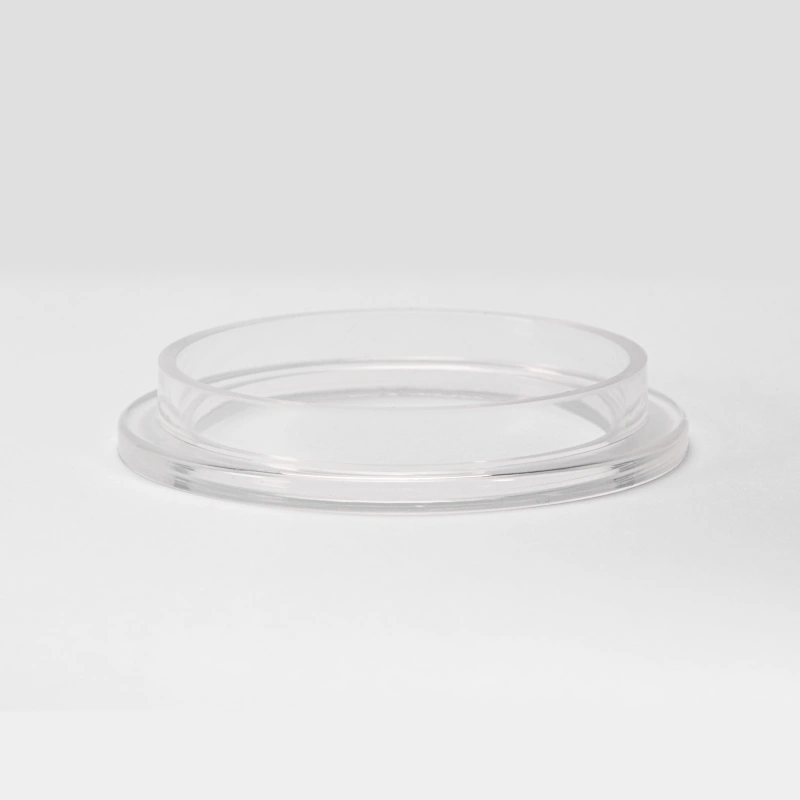
Medical-grade LSR available for prototype programs requiring ISO 10993 biocompatibility documentation.
02
Industrial & Electronics OEMs
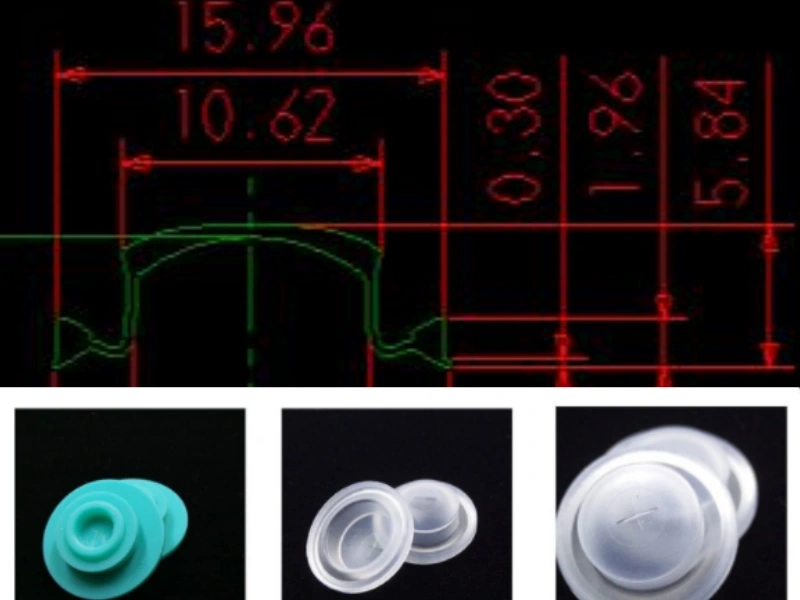
Industrial product engineers use aluminum soft tooling to produce small pilot batches for field testing, supply chain qualification, and early customer validation. Aluminum prototype tooling supports pilot runs of 50–500 pieces — enough for field trials and first commercial deliveries while production tooling is being completed.
Bridge production from prototype tooling prevents market launch delays while production molds are manufactured.
03
New Product Development Programs
Product development teams use rapid prototyping to iterate quickly on geometry, hardness, and material selection before finalizing production tooling specifications. Running two or three prototype iterations in parallel — testing different Shore A grades or geometry variations — is more cost-effective than discovering the wrong specification after production tooling is complete.
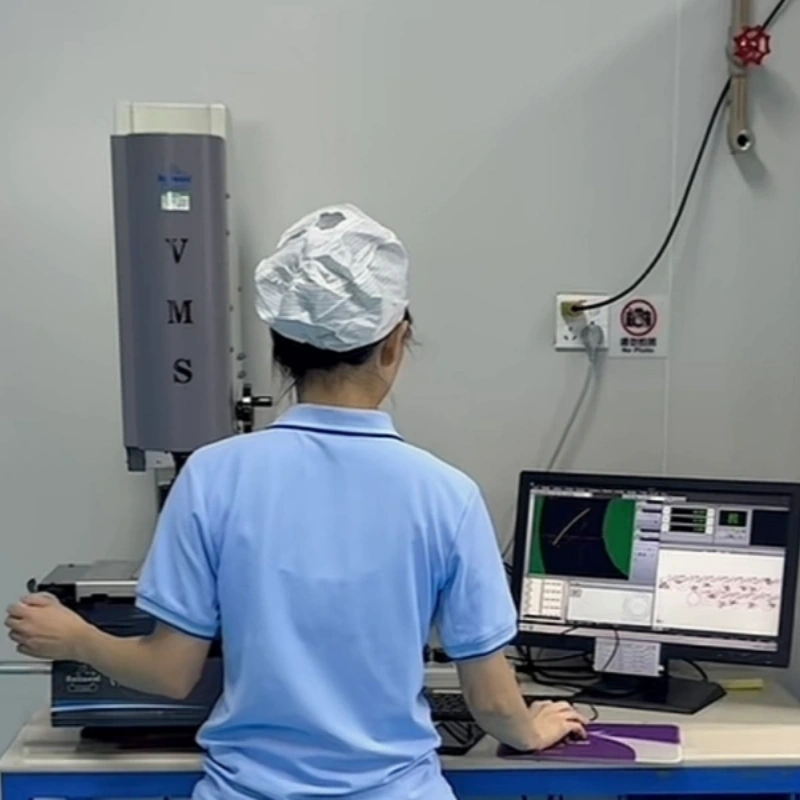
Multiple prototype iterations can run in parallel to accelerate design convergence before production commitment.
Industries We Support
Rapid silicone prototype tooling for development programs across four primary application areas.
Frequently Asked Questions for Silicone Rapid Prototyping
A1:For LSR prototype tooling, T1 samples are delivered in 10–14 business days from DFM-approved drawing. Aluminum soft tooling programs deliver in 7–10 business days. 3D printed silicone samples for geometry validation are available in 3–5 business days. Lead time begins after DFM approval and NDA execution.
A2:Yes. Our aluminum soft tooling supports pilot runs of 50–500 pieces per run — suitable for clinical trials, market testing, regulatory sample submissions, and early commercial deliveries. This bridge production capability prevents launch delays while production tooling is being manufactured.
A3:Our prototyping DFM review specifically evaluates whether the design can be manufactured in silicone at production scale — covering gate location, venting strategy, parting line positioning, draft angles, flash risk, and material grade suitability. Findings are delivered in a written report within 24 hours, and all identified risks are resolved before tooling investment is approved.
A4:Yes. We use production-equivalent LSR and HCR silicone compounds from Wacker, Dow, and Shin-Etsu for all prototype tooling programs. This ensures mechanical properties, surface finish, and dimensional behavior in prototype samples accurately predict production part performance. Material compliance certificates are included with every T1 delivery.
A5:DFM findings from the prototype program are locked into production tooling specifications, preventing the most common cause of post-launch engineering changes. Our in-house tooling team handles both prototype and production mold fabrication, so engineering knowledge transfers directly without re-explaining your project to a new supplier.